Bank holiday weekend closure

We are closing for the bank holiday weekend and our next session is at kirkstall on Tuesday.

If your carrier is due back this weekend it will be automatically extended for 7-14 free days of hire. If you hired from our WYSL Wakefield Outwood or Ossett venues, you’ll get a free week of hire until the next session at the same venue. If you hired from pudsey, you’ll get a free fortnight, for the same reason.

The renewal notices will go out via email tonight, if you would prefer to return on your original return date, use the contact us page and we will see what we can do. If you’d like some extra time, get in touch by responding to the email. If you’d like to return to one or our other sessions that’s fine too – check out our venues below. Returns by post are also fine.

Thank you for understanding and have a wonderful Easter!

IMG_1946.JPG


Change of Venue Alert – Moortown

PLEASE READ THIS MESSAGE

Moortown Junktion cafe has closed today with immediate effect leaving us without a venue for tomorrow’s session.

After two hours of frantic phoning we are happy to say we will be able to run the session at a local church. Venue changes can be tough to manage so we have made sure it is as local as possible to the original scheduled location.

We will be running WYSL services at Moortown Methodist Church Alderton Rise LS17 5LH from 10.30am tomorrow 29/3/17.

We’ll be running alongside Little Monsters Playgroup in the morning, my huge thanks to Lindsey and her team for that! I will confirm a definite end time as soon as I know one but a member of our team will be at the above address until 2pm to receive returns.

We do not know yet where the Moortown session will continue but we are committed to finding a permanent venue for the area – bear with us whilst we adapt around these circumstances outside of our control.

Please share this with anyone you know interested in this session. If you have any concerns about your visit call Nicola on 01132100855, email wyslinglibrary@outlook.com, or if you are trying to find us call 07505776950.

If you’d prefer to renew your carrier until next month (26/4/17) just call or email and we’ll arrange that. We are sorry for any inconvenience caused by the change of venue.

Carrying in Special Circumstances – The Ergobaby Adapt

When I work with parents with special circumstances, it helps our community to share carrying solutions that work.

Recently I worked with a visually impaired family and the carrier which was selected was the Ergobaby Adapt. It has several features which made it work very well for parents without sight or with visual impairments.

The Adapt is a carrier which is entirely one unit, without separate pieces or removals extras. The hood is integral, yet folds away, and the carrier needs no insert or accessory pieces.

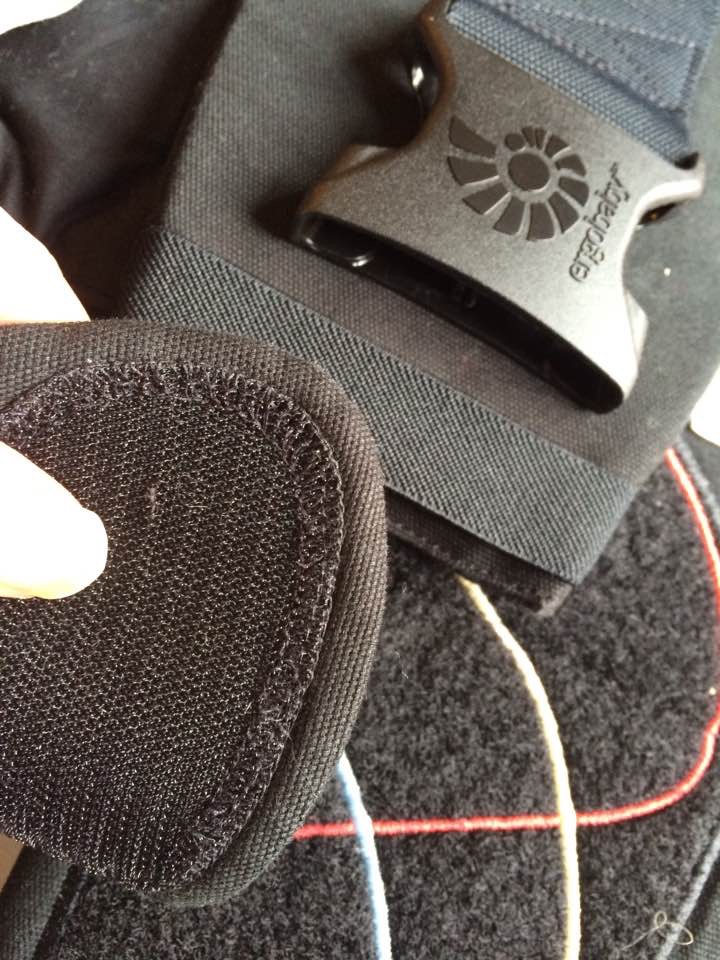
When adapting to newborns and young babies, the inner of the waistband uses a velcro fitting system which is very tactile. Although the guidance on age range is outlined on the carrier by coloured lines, suggesting different fits, the lines are embroidered into the Velcro, making them easy to ‘read’ – like Braille.

[Picture shows close up of ergobaby adapt carrier waistband. Three embroidered lines of thread in blue, yellow and red guide the sticky Velcro pad into place]

IMG_1419

Another feature of the Adapt is the inner fabric of the carrier is different to the outer surface. The shell lining feels softer, which makes it easy to identify which part of the carrier you are handling by touch.

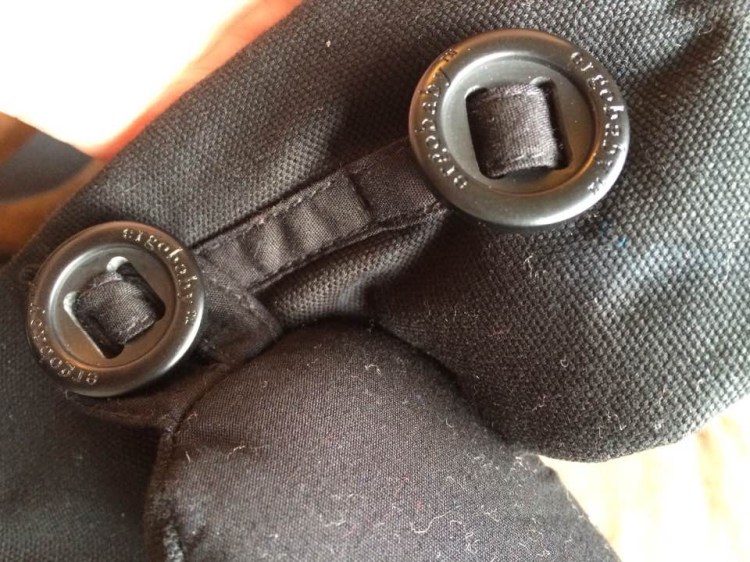
All of the buckles and head rest adjusters on the Adapt are placed on the body of the carrier within easy reach. The head rest adjusters are round, shiny buttons and immediately distinguishable from the rectangular, textured side buckles.

[Photo shows Ergobaby Adapt carrier headrest buttons in close up. Two black buttons and a padded headrest]

IMG_1420

The wide set shoulder straps allow plenty of space for safe movement of air around the baby’s head and face, and make checking on the baby by touch easily accessible.

The carrier straps, when done up in the parallel configuration, allow the carrying adult to use the carrier without dangling ends or trip hazards.

We found this carrier to be a really favourable option to last from newborn to toddler, and that it has several really excellent features for use by those families with visual impairments.

Keeping babies close is always valuable, and getting the right carrier is important. When families have specific requirements from a carrier this is even more so. The Ergobaby Adapt worked so very well for the family in question they now have their own – everything from the audible click when the buckles sited, to the safety elastic, to the machine washability of the carrier seemed custom made for them.

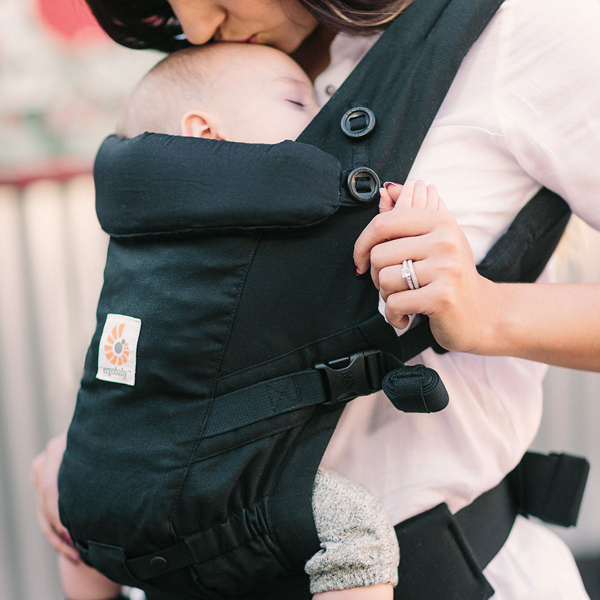
[Picture shows woman dressed in white, in black ergobaby adapt. She is kissing her sleeping baby’s head and they are holding hands]

ErgoAdapt6

Here at WYSL we have had the privilege of working with families with all types of special needs, from early babies to disabled carers, multiples to children with life limiting illnesses. It’s all about matching the carrying solution to the situation, and in this case, it was a perfect match!

Many thanks to the family and to Ergobaby UK.

Christmas is here!

It’s our annual CLOSURE – after offering sling library services all year round we are due to close for two weeks over the Christmas period.

We will close for enquiries, rentals and returns at 2pm on weds 21st December, after our drop in session at Tiny Toes Horsforth.

We have already extended any rentals falling due over the Christmas period through to the new year – we do this for every hire for free! The exception is if your carrier has fallen overdue. Please get in touch with use to remedy this as soon as possible, as normal charges will apply over the period for overdue carriers. Please do not use the drop box over the festive period as we will not be checking it.

We will reopen at the Moortown Drop in on Wednesday 4th January. We won’t be too pedantic about carriers due back the first week of January, allowing reasonable leeway people to bring them back to a venue that suits.

The sling library drop box at 55 Thornfield Avenue Farsley Leeds LS285HJ will be reopened for drop offs on Tuesday 3rd January.

The sessions of the first week back are

Weds 4th Jan Moortown Junktion Kids 10.30-2pm

Fri 6th Jan Fuzzy Ed’s, The Sun Inn, Outwood 10-12am

Fri 6th Jan Pudsey Wellbeing Centre 12-2.30pm.

We’re going to be back next year with even more new venues so once they are all decided, we will post a full 2017 calendar.

Wishing you all a very merry Christmas!


Welcoming WYSL Wakefield


This September sees us add a whole new chapter to The sling library in the form of our new Wakefield branch. The sling library name was always based on us sitting between Leeds and Bradford, but finding any amalgamation of those city names too clunky. So The West Yorkshire Sling Library was born, and now it is starting to live up to its name (of course we also have to shout out to other excellent local services such as the Huddersfield sling library and Carry Moor based in Ilkley!)

We’ve always been asked for more sessions and over time have moved from being entirely home based in 2011 to running the first out of home sessions – the Pudsey sling socials – in 2013. After that came other west Leeds venues in Farsley and Pudsey and then at beginning of this year we started our extremely popular Horsforth session. Just this summer we expanded to include a Kirkstall session at the lovely space provided by Kirkstall Children’s centre, and our first session in Moortown Tiny Toes was held in August.

I can tell you now that is a lot of slings and carriers to buy, a whole lot of heavy boxes to move, laundry to do and a lot of babies being carried! I can’t tell you how wonderful it is to see the sling library grow.

And now, a fanfare please. We’d like you to welcome not only a whole new session but a whole new team running a weekly drop in session in Wakefield. Nicki, Kirsty, Natalie and Helen have joined us to provide sling services to a whole new area. It’s a very exciting time!

What will change?

If you are local to our existing sessions, probably nothing. The only change you will see is that when you look up our in-stock carriers on our rental system you will now notice a location code below each one which will tell you where the carrier is based – at our Leeds locations or the Wakefield ones. We won’t be swapping the carriers around too much, so please don’t fall in love with one of the Wakefield carriers unless you are fancying a day trip.

If you are based in East or South Leeds, or Wakefield and surrounds, you might choose to come along to one of our new Wakefield sessions to join the fun. They will be running at Cloud 9 in Ossett every Monday between 1pm-2.30pm. They will be a base for carrier advice, rentals and returns. Simply using the search term WF on our online system here will show you the whole of the Wakefield stock. The new sessions have a small charge for entry of £1.00 per adult and 50p per child (babies in carriers are free).

To access our stock system please click this link

You can still contact us here using the contact us page or by emailing wyslinglibrary@outlook.com if you have any questions about our new sessions.

Why it is important not to ’round up’ your baby’s age

As I type my youngest child is three. It will be her fourth birthday next week. I’m resisting the urge to refer to her as ‘four’ or even ‘nearly four’. She is three, and I will only be able to say I have a three year old for another week. I’m making the most of it.

I’m not writing this to tell you to make the most of every minute or to tell you that babies grow so quickly or any of the other clichés. You know they grow quickly, I’m sure you are trying to make the most of it, and often those phrases aren’t helpful if you are struggling or in the midst of a difficult age or stage. It’s OK to say you miss the tiny newborn they were a few months ago or prefer the toddler you can see coming on the horizon. If I’m talking in cliché, I prefer ‘the days are long, the years are short’. It’s OK not to enjoy every minute.

blopic

I’m actually saying this because it really, really matters from a safety and comfort point of view when fitting slings and carriers. We know all children are different, but the first question we will ask when fitting your carrier is the age of your child. When it comes to age recommendations for certain carriers of carrying methods, it’s super-important not to ‘round up’. And the younger your child, the more this is true.

Take for example a carrier which is suitable for babies from a minimum of 4 months of age. With 4 months as a minimum, it is unlikely to properly fit a baby of 12 or 14 weeks. I know it is such a short time and you want the carrier to last. But the younger a child is, the faster their weight and development are progressing – the more those weeks or months matter. If you go up the scale a little, in terms of length of time alive, saying a 3 month old is near enough 4 months is like saying a 14 year old is capable of the same things as a 20 year old, or that a 42 year old adult is nearly a pensioner. Fitting a carrier that is too large, or putting a baby in a carrying position not recommended for their age, has significant safety concerns. We know all babies are different, and the age guidelines are not set in stone. But they are there for a reason. The manufacturer’s guidelines and minimum age ranges are based on averages, sure, but also on distinct stages of child development.

As children grow, it is easy to assume that they will continue to grow at the same rapid rate as they did

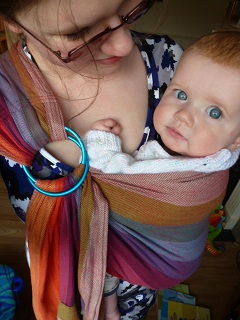
image
Fitting a 3.5yo.

in their first year. Growth slows through the toddler years, so rounding up at this age can also result in ill-fitting carriers, or in children not being carried at all. It’s easy to round up a 14 month old to 18 months to get a toddler carrier, find your new carrier a lot less comfortable, and conclude it’s because your child is older and heavier – but it may well be that the carrier is too large, resulting in poor weight distribution. Carrying can end before you would like it to by ’rounding up’ your child’s age.

On the other end of the scale, let take for example a carrier suitable to age 3. It’s tempting not to consider it for your child of 2 because you won’t get the use from it as you would have if you had bought earlier. Of course, if you consider it another way, you are considering a product which will last for half of your child’s life so far. ‘Rounding up’ here can prevent a year of carrying – a year is a huge amount of time for your child, and longer than most of their clothes and shoes will last!

When they are older, the same is true of weight limits in carriers. Getting a carrier with a 35lb upper weight limit when your child is already 25lb seems like it wouldn’t last that long. But consider average weight gain between 1st and 2nd birthdays is 7lb, and between 2nd and 3rd birthdays just 4lb – and that carrier can last you nearly two years. That’s like buying something at 20 years old and having it last until you are 60.

Not rounding up our babies isn’t about making the most of their childhood – it’s about making sure your carrying solutions are age appropriate, safe and comfortable. It won’t be the same for every child, but the starting point is always an accurate age!

All things being equal, the baby carrier industry is sexist.

I’ve started to write this several times, and I’ve always used too many words. Instead I’ve deleted the lot and put down two definite truths. Here they are.

As a sling library we first and foremost offer choice, and try to make carrying accessible to all.

One of the biggest barriers to doing this is gender stereotyping.

I could list how many times people pass over the carrier they want, that works for them, because of concerns about how it might look, how it might be perceived by others including their partners, because of its style, colour or print. I could, but the problem doesn’t lie with those endless debates on sling groups about whether you’d put a boy in a flowery carrier, it’s not about the patronising stereotypes of ‘husband-friendly’ carriers, or the damaging designation of buckle carriers as inherently male and flowing wraps and ring slings as inherently female. If you want to read more about the division this sexism causes, you might wander over to one of the excellent campaigns aimed at equality  – ‘Let Toys be Toys – for girls and boys’ or ‘Pink Stinks’. They are full of information about how damaging gender stereotyping is to boys, girls, men and women alike. But when it comes to the carrying industry, all we really need to know is this:

Gender stereotyping in carriers stops many people or families from carrying at all.
Gender stereotyping restricts the range of carriers available to individuals and often leads to less than optimal choices.

It begins with the designation of carrying as a female practice, the carrier industry as a female space. I very rarely write a blog piece directed at the carrying industry itself, but this is one area in which the industry as a whole can make a huge difference. It’s time to cast a gender-critical eye over the industry and speak honestly about what we see. How inclusive are we? It is not restricted to gender, of course, but that is what I want to speak about today. And this is what I want to say.

If your website refers to ‘mothers’ or ‘mothering’ and carrying as a tool for motherhood, without equal reference to fathers and any other extended family or caregiver who might be using a carrier, you are limiting your market.

If you use ‘ladies’, ‘mummies’ ‘mums’ or ‘mamas’ as a collective term for your attendees, or as a term of address for your audience, you are not being inclusive. 

If your carrier is size limited, and you use dress size, rather than body measurements, you are excluding men’s sizes and suggesting they are not your target market.

If your marketing includes only pictures of women using the carrier, or primarily women using the carrier, you are contributing to the idea of carrying as a female only practice.

If your marketing includes the idea that your carrier is ‘aimed at men’, ‘daddy-friendly’ or equivalent, you are being sexist in the way you portray your product.

If you categorise carriers by type, print or colour based on their blanket appeal to gender stereotypes, you are perpetuating the stereotype.

If you make assumptions about the types of carriers adults will want to see or use based on their gender, rather than their build, body type or stated preference, you are allowing gender stereotypes to unfairly influence your recommendations.

If, in relationships with families, you as habit speak firstly to one gender, or however subtly treat them as decision maker purely due to gender, you are influencing the gender dynamic negatively.

The designation of carriers as male or female prevents people, often men, from using them in the first place. From a carrier retail industry perspective, that is less sales, less customer satisfaction, more returns, greater aftercare and brand negativity. From a sling library industry perspective, it means times after time families missing out on carrying completely because it isn’t portrayed as being for them – or choosing the less optimal choice in terms of fit, suitability and budget because of a preconceived idea, borne out by the industry, that they are not making the ‘correct’ choice. From the perspective of supporting families to carry their children, no matter what that family dynamic, sexism is restricting choice, and it is restricting access, and it is exactly what any sling support industry professional should be trying to avoid.

Sexism in the carrier industry isn’t about not wanting to put your little girl in a space rocket print or worrying about handing down a pink wrap to a little brother. Those are symptoms of a much more worrying whole – families, or certain members of families, being excluded from carrying because it does not feel normal or accessible to them.

Families thrive on close relationships, in the early years founded on close physical contact, trust and proximity. There are many understandably female exclusive preserves in the pregnancy and nursery industry but it is very important, I believe, that the carrying industry is not one of them. If you are in the carrier industry, please be aware. Please strive to be part of the solution and make carrying accessible for everyone. If you are a consumer, and you see any of the above happening, or feel stereotyped or marginalised yourself, tell us. Tell the retailer. Tell the service provider. Speak.

Let carriers be carriers. For everyone.

Upper weight limits

Most carriers come with both lower and upper weight limits. In the sling library, we work for more often with the constraints of the lower limits, carriers suitable from 5lb, or 15lb, for example, work in very different ways. It is very important that a carrier is appropriate for the size of a child as well as offering growing room. But on our recent theme of toddler carriers, and even preschool sizes, the upper weight limits are what come into play.

How important are upper weight limits?

Observing the manufacturer’s upper weight limit is very important. Checking your carrier regularly for wear and tear if your child is approaching the weight limit is also a good idea. Ergonomic carriers are usually safety tested to a fairly high weight, and it is most common for a child to not need carrying any more before the weight limits comes into play. Nonetheless, it is a good idea to know the limit on the carrier you are using. Some carriers such as most brands of woven wrap have no practicable upper weight limit – as long as they are in good condition, the carrying strength of the adult is the only real limit. image

It is important to know that an upper weight limit does not mean a carrier is certified comfortable or safe up to that level. It is quite possible for a child to outgrow a carrier developmentally or in height well before they hit the upper weight limit.

What are the most common upper weight limits?

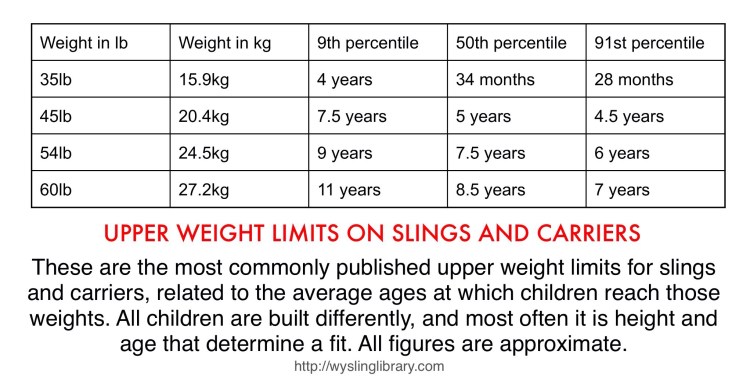
Different types of carrier tend to have different average limits. Front pack style carriers, with arm and leg holes, and a harness for the carrying adult, tend to have the lowest limits, as their way of distributing weight is not as effective as a more it doesn't matter how big they getergonomic option. Woven wraps and soft structured carriers tend to have the highest weight limits, with the toddler and preschooler size soft structured carriers having some of the highest. Upper weight limits are most often presented in pounds but we have referenced them in kilograms also.


So how long will my carrier last?

If you have a child who still wants to be carried, and you are happy to carry them, there are three main things to look for in how your carrier fits. Is the body height high enough, or can it become high enough via a headrest or adjustment, to support the child adequately? Your carrier should fit to firmly under the armpits as a minimum. Is the body width wide enough to support the legs, or can it be made wider using footrests like with the Boba 4G, or extenders such as the Tula Free to Grow width extensions? Ideally your child’s should be supported in a capital M shape. And what is the upper weight limit on your carrier? Is your child inside this limit?

As you can see in the following table, although all children are very different, in most cases upper weight limit is very generous and should last years, as well as inspire confidence in the structure and components of the carrier. Average weights taken from UK growth charts.

image

Be safe, be snug, sometimes bigger kids need a carry too!

Buckle Carriers and Sizing

So that carrier comes in standard size, that one in toddler, that one adds a preschool size, who know what that’s about! That brand has all three but says the standard will suit toddlers, but if that were true why would they have a toddler size? What is a toddler anyway? A child who can walk – even if they are nine months old? Is is based on weight, age, or shoe size? I want something that is going to last. This is a one time only purchase. I don’t want it outgrown. That one says it suits to 35lb, is that realistic? How old is a 35lb child anyway? That one says 45lb, but looks smaller! That standard size has the same weight limit as that preschool carrier, how does that make sense? My baby has always been super chunky, do they need a toddler size? My baby is a little dot, will they ever need a size up? Does it matter how big I am? Why do some manufacturers make a toddler size and some don’t? Can you really carry a 45lb child anyway?!

image

It’s confusing. We know! So here are the facts about buckle carriers and sizing.

1) Toddler sized carriers are a relatively new invention.

Although toddlers and preschoolers have always been carried, the ‘sizing up’ of existing buckle carriers into a larger toddler fit is something that has only really happened in the last ten years as the baby carrier industry has expanded. You might call it progress, you might call it marketing – in reality it is probably both. Most standards were designed to last years, not months – and a toddler sized carrier needs to be significantly larger than a standard size to make it worthwhile. And that’s pretty big.

2) There is a huge overlap between carrier sizes.

Most children will fit both sizes at least for a time. Many will fit two different sizes fine for years, leaving it entirely up to the carrying adult which they prefer.

3) Height matters more than weight.

A heavy baby needs a supportive carrier, for sure, so it is very important that it fits well. A carrier that is too big or too tall for the child will not fit well and make them feel even heavier than they are.

4) Fit matters more than anything else.

Firstly, fit is a safety issue. A carrier too large for a small baby can lead to slumping, problems with airway or abnormal restriction of movement. A carrier too small for a large child can lead to abnormal leaning, a fall risk, strains for the carrying adult and chafing for the child. But what is a good fit? Often, it has little to do with the carrier size and whether the panel is 14/15/16/17 inches wide or the same tall.

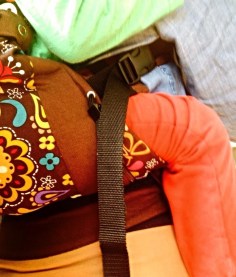
imageA carrier that fits a toddler well allows the child’s legs to be supported in an M shape – it does not have to have fabric tucked in to the back of each knee to achieve this. You can do the same thing by lifting a child’s legs into a seated position and adjusting the carrier waistband around you to hold them there without chafing. A carrier does not have to enclose the arms unless you both prefer it that way, but it should fit snugly underneath the armpits when the shoulder straps are flat on your shoulders.

Fitting the waistband at a different level, around the hips, allows for the full height of a carrier to be used to support the child. It also allows for the shoulder loops to tighten at an upward angle, which creates a snug band of support across the child’s shoulders and back, distributing the weight around the torso of the carrying adult.

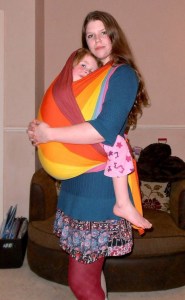
A child’s torso should be parallel with your torso when in the carrier. A carrier that is imagetoo large allows the child to sit back in the carrier, angling away from you, because the panel is too wide for your shoulders. This is not good weight distribution and can be painful after a while.

5) If in doubt – size down.

I know, you want it to last. It will. But if it helps,think about it like this.

There are four sizes for buckle carriers, not three.

It’s important to know, when choosing your carrier, that how the carrier fits a tiny baby at the start makes an impact years later. If you divide buckle carriers up into three sections – baby, toddler, and preschooler, it is easy to see how you might size up a little early – for example, consider a toddler size for your eight month old because they are pulling up to stand, and you’ve already missed eight months of use and value from a baby size. However, if you divide it into four sections – infant, baby, toddler and preschooler – the picture changes.

Infant – birth to 4-6 months.
Baby – 6 months to 18-24 months.
Toddler – 18-24 months to 3-3.5 years.
Preschool 3-3.5 years to 5 years approx.

All of a sudden, your eight month old is firmly in the beginning of the baby size section, with lots of growing room. Some carriers achieve the infant fit by insert, cinching strap, cinching mechanism….some way of making your baby size carrier smaller. Babies need to grow into their baby size!

When we’re talking toddler sizes, it is much, much easier to get a smaller carrier to ‘grow’ than a too-big carrier to ‘shrink’ enough to provide adequate support.

The one thing that you can guarantee is, in the world of buckle carriers, it’s better to try on before you buy. Standard sizes can fit throughout your carrying years if you want them to – or you might size up. There will never be any substitute for a good fit!

Let’s see those pictures side by side. They are the same, standard sized carrier, carrying a child aged 3 years and 9 months. The only difference is the fit.
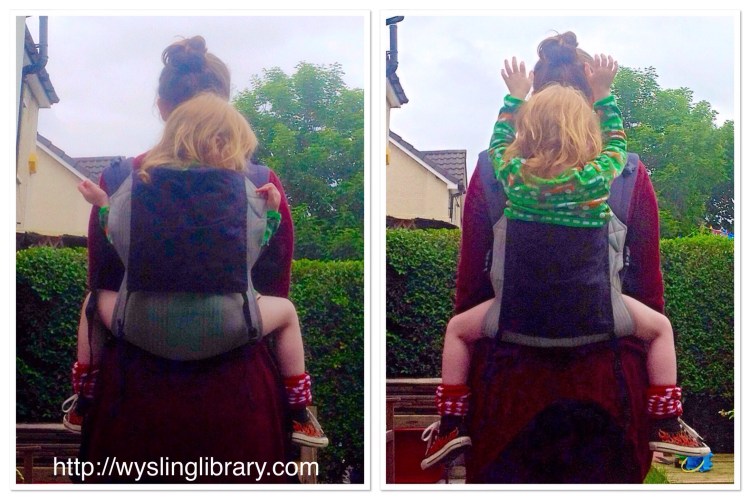

image


News for 2016!

Tiny-Toes-logo1

The website is being reorganised as I type to reflect our new systems and locations for 2016!

The biggest news is the implementation of our computerised rental system – from January you will be able to register your details on a central site, allowing us to click rental items in and out at drop in sessions easily and quickly. The system can show you the full library collection and catalogue when you log in, allow you to renew your carrier online, and see live availability of the carriers you would like to rent. It will also email you reminders when your carrier is due back! We will be moving over to this system during the first months of 2016 and expect it to take a little longer initially but be super fast in the long term – so please be patient with us as we get used to it!

We are happy to announce we are expanding to cover more of Leeds in 2016. We are aiming to place drop in sessions at convenient locations around the city, so that users can more easily access sling and carrier services. The first place we are expanding to is Horsforth, and we will be starting a monthly drop in service at Tiny Toes Play Centre on the 20th January 10.30am-2pm. Tiny Toes is a play centre aimed at under 5s, and they are allowing us to use their home from home area to run drop in sling services. The drop in remains free, with free pick ups and drop offs, free entry for sling and play for babies under 12 months – and best of all half price entry for older ones who want to play! You can see more about the centre by clicking here.

Watch this space for the next venue announcement!